How TiMi Studio Group and Level Infinite turned a massive technical hurdle into a new standard for global esports
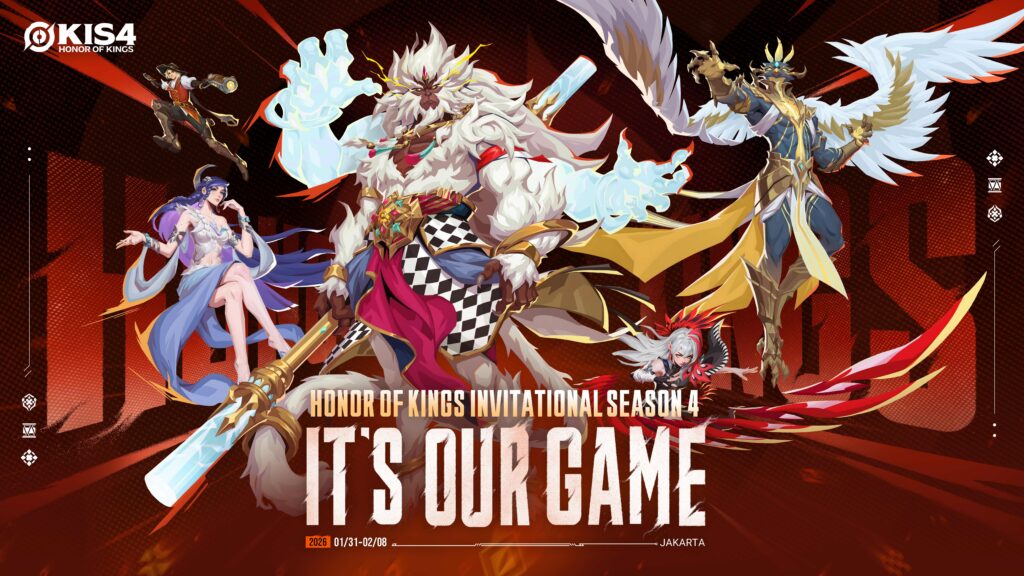
Ten players collapse on the Tempest Dragon in a deciding Game 5 at the Honor of Kings International Championship. The arena is deafening. Casters are breaking down the team fight in real time. But when that exact broadcast feed lands on a screen in Sao Paulo, Riyadh, or Jakarta, the play translates and the words don’t. A viewer can read the cooldowns and positioning, but without the commentary in a language they actually speak, the tension drains out of the moment.
For TiMi, going global meant fixing this. The team knew that an Honor of Kings community now stretching across over 696,000 concurrent viewers, according to statistics from Esports Charts, needed a broadcast that felt local, wherever the viewer happened to be sitting.
The traditional fix in esports broadcasting is brute force. You hire a separate commentary team for every language, set up parallel audio feeds, and accept that you can only ever cover a handful of regions. Even the best casters can’t keep pace with a tournament that wants to land in a dozen markets at once, and every fan whose language doesn’t make the shortlist watches a different, quieter version of the match.
TiMi needed something that could grow with the audience itself: every time Honor of Kings opened a new market, the broadcast had to be ready to speak that market’s language too. That is where data engineer Xia Guanghui and his IgniteX team from Level Infinite came in. Together they built an AI-driven localization pipeline that lets Honor of Kings broadcast live events with real-time translated subtitles in up to 12 languages at once. What was a massive technical hurdle has become a new standard for global esports.
The Broadcast Bottleneck
“I’m a hardcore esports fan myself,” says Xia. “When I used to watch overseas tournaments, the live feed rarely had my local language. Sometimes I had to guess what the casters were analyzing just by watching the screen.”
When Honor of Kings began accelerating its global footprint, this issue magnified. Spinning up a dedicated native-speaking commentary stream for every language means coordinating caster schedules and routing complex audio feeds. In practice, that work caps how many regions can ever see the match in their own language. As the global community grew, the broadcast had to grow with it, ready to greet every new market in the language its fans actually play in.
The engineering team realized that if they combined TiMi’s deep game knowledge with customized AI models, they could solve the problem at the root. Today, for major events like the King Pro League Grand Finals Finals, the system translates its native Chinese commentary directly into Indonesian, Malaysian, Portuguese, and Filipino. For the highest tier of global competition, the Honor of Kings International Championship (KIC), the pipeline takes the English broadcast feed and simultaneously generates live subtitles in German, French, Japanese, Russian, Turkish, Burmese, and Bengali.
The goal was never to replace top-tier human casters for major English or local feeds. The goal was to ensure that no matter what language a fan spoke, they could understand the tactical breakdown of a match.
15 Seconds from Mic to Screen
Live esports broadcasting is unforgiving. There are no second takes, and the action moves at a blistering pace. To make AI localization work, the team had to compress an immensely complex pipeline into a tiny window.
When a live feed leaves the tournament venue, the translation pipeline splits the audio from the video. The AI-powered localization system then isolates the casters’ voices, transcribes the speech, and routes it through a specialized translation engine. Once translated, customized feeds are generated, synced back to the live video, and pushed out to platforms like YouTube, Twitch and TikTok.
The entire process from the caster speaking into the microphone to the translated text appearing on a fan’s screen halfway across the world takes under 15 seconds.
It also handles the special cases. During the massive Honor of Kings 2025 Anniversary Co-creation Night—a relentless over five-hour live marathon—the team proved the system isn’t just a translation engine; it is a broadcast-grade control room. The pipeline dynamically switched subtitle modes on the fly: bilingual subtitles ran during host segments and sponsor reads, English text rolled under Chinese opera, rap performances, and stage plays.
The Human Touch in an AI Pipeline
AI translation tools struggle with gaming terminology in general. A direct machine translation of MOBA slang is usually unreadable. To fix this, the tech team built a massive, constantly updating Honor of Kings library.
Before a new language goes live, the localization team spends weeks fine-tuning the system. They feed the AI specific hero names, skill descriptions, and even regional esports slang. But the real magic happens during the broadcast.
While the 15-second pipeline is fully automated, human experts stay in the loop. Linguists and local game experts monitor the live streams. If a caster uses a brand-new slang term, or if the AI mistranslates a nuanced tactical phrase, the experts flag it. Engineers immediately update the backend database, allowing the AI to learn and correct itself in real-time while the match is still being played.
The Next Chapter: Finding the Voice
The system’s debut at the 2025 Anniversary event last October was a massive stress test, but it worked. Fans watching on YouTube and TikTok immediately praised the accuracy of the subtitles. The pipeline was rolled out next for the KPL Finals, the Esports World Cup (EWC), and the Challenger Cup, opening the matches to fans in more and more markets while giving every viewer the same experience in following the tactical breakdown in real time.
But subtitles are just the beginning.
“Text can tell you what is happening, but it can’t convey the emotion,” Xia says. “When a caster screams because of an incredible play, reading the word ‘amazing’ doesn’t give you the same immersion as hearing it.”
The team is already working on the next evolution: Text-to-Speech (TTS) AI commentators. By converting the real-time translations back into localized, emotionally resonant audio, TiMi aims to give global fans the exact same adrenaline rush as the home crowd.
Honor of Kings isn’t just expanding its server footprint. It’s learning to speak its players’ languages, wherever in the world they are.
That linguistic leap arrives just in time for the game’s next major competitive stage. From June 13 to 21, Kuala Lumpur, Malaysia, will host the 2026 Asian Games Esports Qualifiers: Honor of Kings. There, 20 teams will battle for a spot at the 20th Asian Games in Nagoya, Japan in September, joining directly qualified nations China, Malaysia, and Thailand. For fans tuning in globally, the new broadcast pipeline ensures that no matter who is on the microphone, the tactical breakdown comes through loud and clear.
Frequently Asked Questions
What are the major international events for Honor of Kings global players?
The global Honor of Kings ecosystem features massive premier events such as KIC, the regional KPL Finals, and spectacular community milestones like the 2025 Anniversary Co-creation Night. These events are livestreamed to audiences worldwide.
How is TiMi improving the global broadcast experience for HOK fans?
To ensure international fans can stay fully immersed in every tactical analysis and the hype of a massive team fight, TiMi developed an AI-driven localization pipeline. This system translates live caster commentary into up to 12 languages simultaneously, delivering real-time localized subtitles to viewers’ screens during livestreams.
What is the next step for Honor of Kings esports broadcasting technology?
While real-time translated subtitles have successfully broken down language barriers, text alone cannot fully capture the raw emotion of a live match. The IgniteX team is actively developing Text-to-Speech (TTS) AI commentators. This next evolution aims to convert the real-time translations back into localized, emotionally resonant audio, giving international fans the exact same adrenaline rush as the home crowd.
This story is part of The Engine Behind the Epic, a new Level Infinite feature series pulling back the curtain on the unsung heroes powering our partner studios. From technical infrastructure to global marketing, we are spotlighting the teams and tools that help games thrive on the global stage. Stay tuned for more inside looks at the people building the future of play.